

A large share of the cases avian veterinarians see trace back to one thing: what the bird has been eating. Not neglect, not cruelty. Owners who loved their birds and fed them the colorful seed mix that came recommended at the pet store.
That is the uncomfortable center of this subject. Malnutrition is the leading cause of preventable illness in companion parrots, and it develops so slowly that by the time a bird looks unwell, the damage has usually been building for years.
This guide covers what parrots actually need, how much of it, which foods will kill them, and how to move a seed-addicted bird onto a proper diet without starving it in the process. The ratios below come from avian veterinary sources rather than pet-food marketing.
The short answer
A pet parrot should eat roughly 60–75% formulated pellets, 20–30% fresh vegetables, 5–10% fruit, and treat seeds and nuts as training rewards, not meals.
Never feed avocado, chocolate, caffeine, alcohol, onion, garlic, xylitol, fruit pits, or apple seeds.
An all-seed diet causes vitamin A deficiency, fatty liver disease, and calcium deficiency — the three conditions that shorten more parrot lives than anything else.
Parrot Diet at a Glance
| Food type | Daily proportion | Best choices |
|---|---|---|
| Formulated pellets | 60–75% | Harrison’s, Roudybush, Zupreem Natural, TOP’s — avoid dyed or sweetened varieties |
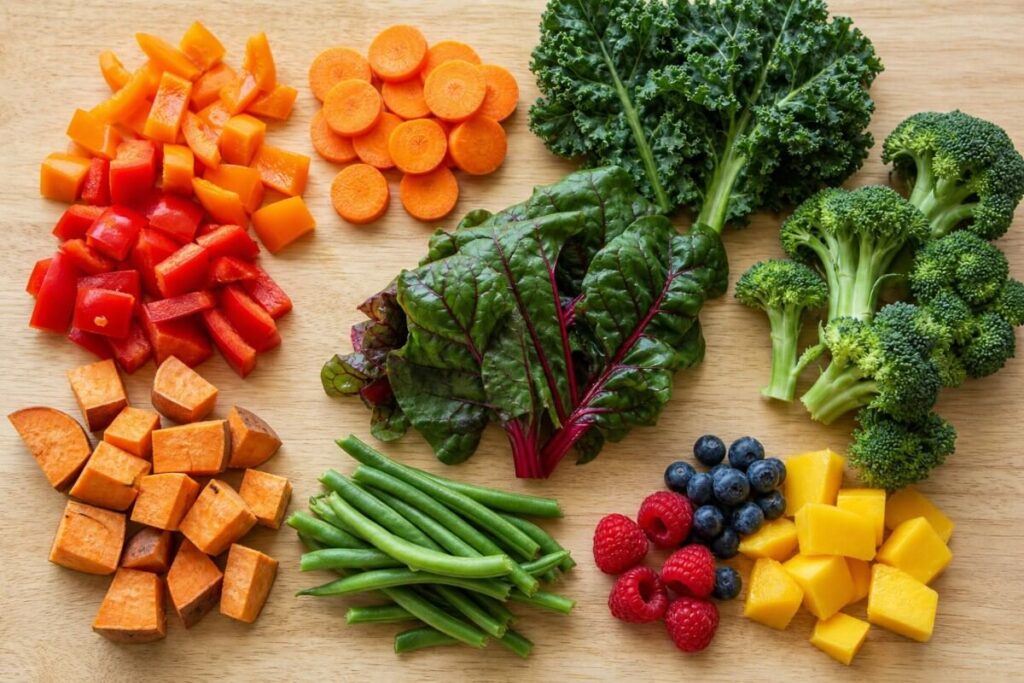
| Fresh vegetables | 20–30% | Kale, Swiss chard, carrot, sweet potato, bell pepper, broccoli, squash, peas |
| Fresh fruit | 5–10% | Papaya, mango, apple (no seeds), berries, melon, pomegranate |
| Grains & legumes | ~5% | Cooked quinoa, brown rice, lentils, chickpeas — always cooked |
| Seeds & nuts | Treats only | 1–2 nuts daily as training rewards |
| Water | Always available | Changed daily, twice daily if food gets dunked |
Why Wild Diets and Captive Diets Are Not the Same Problem
Wild parrots eat seeds, nuts, fruit, flowers, nectar, bark, and occasionally insects. Owners hear this and reasonably conclude that a seed mix mimics nature.
The flaw is energy expenditure. A wild parrot flies miles a day between foraging sites, roosts, and nesting areas. According to the World Parrot Trust’s nutrition guidance, a captive bird expends 10 to 15 times less energy than a wild one. The same high-fat diet that fuels a bird crossing a rainforest canopy makes a bird sitting on a perch obese.
Wild parrots also eat across dozens of plant species through a shifting seasonal calendar. No seed mix in a bag replicates that range. What it replicates is the fat.
There is a second problem, and it is behavioral. Birds do not display nutritional wisdom. Given a bowl containing sunflower seeds and vegetables, a parrot will eat the sunflower seeds. Every time. They select for fat and simple carbohydrate the way a child left alone with a bowl of candy selects for sugar — and for the same evolutionary reason. In the wild, calorie density is scarce and worth prioritizing. In your living room, it is a slow-motion health problem.
This is why formulated pellets exist. Each pellet is nutritionally complete, so a bird cannot pick out the parts it likes and leave the rest.
What an All-Seed Diet Actually Does
Vagueness on this subject has cost a lot of birds their lives, so here are the specifics. Three conditions dominate.
Hypovitaminosis A (vitamin A deficiency)
Vitamin A deficiency is among the most frequently diagnosed nutritional disorders in pet birds, particularly seed-fed parrots. Seed mixtures contain so little vitamin A that birds kept on them routinely develop clinical signs of deficiency.
The deficiency causes squamous metaplasia — a change in the lining tissue of the mouth, sinuses, respiratory tract, and digestive tract. In practice this presents as white plaques or abscesses in the mouth, chronic nasal discharge, recurring respiratory infections, swelling around the eyes, and thickened skin on the feet.
Worth noting: even a diet of half seeds and half pellets is deficient in vitamin A if portions are not controlled, because the bird will still preferentially eat the seeds.
Hepatic lipidosis (fatty liver disease)
High-fat seed diets combined with a sedentary cage life drive fat deposition in the liver. Affected birds present with lethargy, labored breathing, overgrown beaks and nails, abnormal molt, feather color changes, and elevated liver enzymes on bloodwork.
Budgerigars, cockatiels, Amazon parrots, macaws, lovebirds, and young cockatoos are the species most commonly affected. A documented case report describes a 42-year-old African Grey presenting with extensive feather-plucking, red color changes in the leg feathers, and lethargy — the history was sugar, chocolate, and whole grains. With diet modification and supportive treatment, the bird’s bloodwork returned to normal ranges and feathers regrew.
That case matters for two reasons. It shows how far diet-driven damage can go, and it shows that liver tissue can recover if the damage has not already become permanent.
Hypocalcemia and nutritional secondary hyperparathyroidism
The calcium-to-phosphorus ratio in most seeds is poor — high phosphorus, low calcium. Birds on seed diets become seriously depleted, and the problem compounds in indoor birds, where insufficient UVB exposure impairs vitamin D₃ metabolism.
African Greys and cockatiels are notably prone. Clinical signs include muscle tremors, weakness, seizures, pathological fractures, and egg binding in hens. In young African Greys, hypocalcemia can present as osteodystrophy — actual curvature and deformation of the long bones and vertebrae.
Once a bird shows visible signs of hypocalcemia, the deficiency is already advanced. Prevention comes down to dark leafy greens every day, a cuttlebone always available, and annual blood calcium testing.
Formulated Pellets: What to Buy and What to Skip
Pellets are the base of the diet, but they are not all equivalent.
What to look for:
- Extruded or cold-pressed formulations from an established avian nutrition company
- Ingredient list you can read — whole grains, vegetables, added vitamins and minerals
- Size appropriate to your bird (fine for budgies and cockatiels, standard for greys and Amazons, large for macaws and cockatoos)
What to avoid:
- Artificial coloring. Dyed pellets exist to appeal to the human buyer, not the bird
- Added sugars or sweeteners
- Products where the first ingredients are fillers such as ground corn with little else
- “Gourmet” mixes where pellets are blended with seeds, nuts, and dried fruit — the bird will eat the treats and leave the pellets, which defeats the entire point
Brands routinely recommended by avian veterinarians include Harrison’s, Roudybush, TOP’s, and Zupreem Natural. Regional availability varies, and your avian vet can recommend one based on your species.
Fresh Vegetables: The 20–30% That Does the Heavy Lifting
Vegetables cover the gaps pellets leave and add the vitamin A precursors and calcium that seed-fed birds run short of.
Highest value vegetables:
| Vegetable | Why it matters |
|---|---|
| Kale, Swiss chard, collard greens | Calcium, vitamin A precursors — the single best category for greys |
| Sweet potato (cooked) | Dense beta-carotene source |
| Carrot | Beta-carotene, good for foraging when served in chunks |
| Orange and red bell pepper | High vitamin A, and most parrots genuinely like them |
| Broccoli | Calcium, vitamin C, fiber |
| Butternut and other squash | Beta-carotene, soft texture helps with picky birds |
| Peas and green beans | Protein, easy to handle |
Serve them chopped and fresh each morning, when the bird’s appetite is highest. Remove leftovers after a few hours in warm weather, since bacterial growth on wet produce is a real risk.
A note on spinach: spinach contains oxalates that bind calcium, so it should not be the main green for a species prone to hypocalcemia. Rotate it in rather than relying on it.
Fruit: Smaller Than You Think
Fruit belongs in the diet, but at 5–10%, not as the centerpiece most owners make it.
Fruit is sugar, and parrots love it for exactly that reason. A bird filling up on banana and grape is a bird not eating its vegetables. Papaya, mango, apple, berries, melon, and pomegranate are all fine in moderation.
Always remove apple seeds and all stone fruit pits. These contain cyanogenic compounds. The flesh of apples, cherries, peaches, and apricots is safe; the seeds and pits are not.
Wash produce thoroughly unless it is organic. Pesticide residue matters more for a 400-gram animal than a 70-kilogram one.
Seeds and Nuts: The Treats Argument
Seeds are not poison. They are a food group that has been badly over-served.
Used correctly, a nut is the most effective training currency you have. A macaw will work for a walnut in a way it will not work for praise. Give nuts away free and you lose that leverage.
Practical use:
- One or two nuts a day, given as rewards during training sessions
- Sunflower seeds sparingly — they are among the fattiest and most addictive
- Avoid peanuts. They can harbor Aspergillus fungus, which produces aflatoxins and can be fatal to birds. If you use them at all, buy human-grade only and store them properly
- Check nuts for mold and rancidity before offering
Some sources suggest nuts in the shell, which adds foraging work and slows consumption. Cooked egg belongs in the same tier. It is a useful protein source in small amounts, and the shell is a genuine calcium source, though eggs come with a real debate among avian vets that is worth understanding before you make them routine.
Foods That Can Kill Your Parrot
Nothing on this list is precautionary. Each entry has documented toxicity in birds.
Avocado
All parts of the avocado plant — flesh, skin, pit, leaves — contain persin, a fungicidal compound with cardiotoxic effects in birds. Clinical signs such as respiratory distress typically develop around 12 hours after ingestion, and death can follow within one to two days.
Small birds are more susceptible, but larger species are not immune. Persin is not destroyed by cooking, so guacamole and any prepared dish carry the same risk. There is no established safe amount.
Chocolate and caffeine
Both contain methylxanthines — theobromine and caffeine — which birds cannot metabolize safely. Effects include hyperactivity, elevated heart rate, tremors, seizures, and death. Darker and more bitter chocolate carries more theobromine, though no form is safe.
The difference in scale is worth sitting with. One avian veterinarian puts it this way: a person would need to eat around ten pounds of chocolate to experience what an Amazon parrot experiences from a single small square.
Caffeine applies to coffee, tea, energy drinks, and caffeinated soda.
Onion and garlic
Sulfur compounds in both damage red blood cells, causing hemolytic anemia. Concentrated forms — garlic powder, onion powder, soup mixes — are considerably more potent than the raw vegetable. Fatal toxicity has been documented in geese fed large quantities of green onions and in a conure fed large amounts of garlic.
Alcohol
Alcohol is toxic at any dose. A documented case involved a free-flying parrot that consumed alcohol from glasses left out after a party and died of alcohol poisoning overnight.
Fruit pits and apple seeds
These contain cyanogenic compounds. Remove them from apples, cherries, peaches, apricots, plums, and nectarines.
Xylitol
Xylitol is the sugar substitute found in sugar-free gum, candy, and some peanut butters. Avoid it entirely.
Salt and heavily processed human food
Avian kidneys cannot handle a sodium load the way mammalian kidneys can. Chips, salted nuts, processed meats, and most frozen dinners are off the list. Bread sits in the same category. It is not toxic, but it is empty calories that push out food the bird actually needs.
Raw beans
Raw beans contain hemagglutinin, a toxin destroyed only by cooking. Cooked beans and lentils are fine, and a genuinely useful protein source.
Others worth avoiding
Rhubarb (oxalic acid, kidney damage), mushrooms (contested among avian professionals, easier to skip), dairy in quantity (birds lack the enzymes to digest lactose properly), raw or reheated meat and shellfish, and the green parts of nightshade plants — tomato stems, leaves and vines carry tomatine and should never be fed, though ripe tomato flesh is safe in measured portions
If your parrot eats something toxic
Signs of poisoning include sudden lethargy, loss of balance, inability to perch, open-mouthed or labored breathing, vomiting, seizures, disorientation, and collapse.
Any of these following a suspected exposure is a veterinary emergency. Keep your avian vet’s number and an out-of-hours emergency contact somewhere you can find in thirty seconds. With avocado and chocolate in particular, timing changes outcomes.
Converting a Seed-Addicted Parrot to Pellets
This is where most owners fail, usually by either giving up too early or moving too fast.
Before you start: get a wellness check with an avian vet. You need to know your bird is healthy enough for the transition, whether there is existing organ damage from years of seed, and what its baseline weight is. Do not attempt conversion with a sick bird, a bird recovering from illness, or a bird in the middle of a stressful move.
Buy a gram scale. This is not optional. It costs very little, and it is the only way to know whether your bird is actually eating.
The safety limit that matters
The UC Davis School of Veterinary Medicine guidance is specific: during conversion, a bird should lose no more than 1–2% of total body weight per week. If your bird drops faster than that, back off the pace and contact your vet.
Weigh daily during the transition, at the same time each day — first thing in the morning before feeding gives the most consistent readings.
Method 1 — Meal times
This method is widely used by avian practices and works for most birds.
Pellets stay in the cage all day. The old seed diet is offered only during set windows — commonly 30 minutes in the morning and 30 minutes in the evening. Use the same bowls for both so the experience stays familiar.
As pellet consumption rises, shorten the seed windows. Thirty minutes to twenty, twenty to fifteen, and so on. The bird learns that pellets are always available and seeds are not.
Method 2 — Gradual mixing
This is slower, but better for nervous or stubborn birds.
Mix pellets and seeds in the same bowl starting at roughly 10% pellets to 90% seeds. Hold for about two weeks. Then increase to 25%, 50%, 75%, and 100%, allowing two to three weeks at each stage.
The total amount in the bowl should be slightly less than your bird normally eats in a day. Fill it with three days of food and the bird will simply pick out what it likes.
What to watch beyond weight
Droppings. A normal bird produces roughly 8 to 24 droppings in 24 hours. If droppings become minimal, dark, or tarry, the bird is not eating enough. Extend seed access and reassess.
Behavior. A bird that is genuinely eating pellets will crunch them, scatter crumbs, and leave residue. A bird flinging pellets untouched from the bowl is not converting.
Tricks that work
- Grind pellets to a coarse powder and sprinkle over warm sweet potato or squash
- Serve pellets slightly warm — many birds respond better to warm food
- Eat in front of your bird. Parrots are social feeders and will investigate what you appear to be enjoying
- Offer pellets when the bird is hungry, not after it has filled up on seed
- Pick one or two pellet brands, not five. Choice overload backfires
Timeline: some birds convert within a week. Many take two to six weeks. A few take months. The one approach that does not work is going cold turkey — birds will genuinely starve rather than eat something they do not recognize as food.
How Much to Feed
Overfeeding is the most common mistake owners make, and it is almost always well-intentioned.
Large food dishes hold several days’ worth of food, which makes it hard to tell how much the bird is actually eating. Measure a daily volume instead. It prevents overeating, and it alerts you when your bird’s intake drops, which is often the earliest sign of illness you will get.
Rough daily guidance by size, as a starting point rather than a rule:
| Bird size | Example species | Approximate daily pellets |
|---|---|---|
| Small | Budgie, lovebird, parrotlet | 1–2 teaspoons |
| Medium | Cockatiel, conure, Quaker | 2–4 tablespoons |
| Large | African Grey, Amazon, cockatoo | ¼–⅓ cup |
| Extra large | Macaw | ⅓–½ cup |
Add fresh vegetables on top of this, adjusted so the overall ratio lands near 60–75% pellets. Volumes vary with the calorie density of the specific pellet and what else the bird is getting, so let weight be your guide rather than the measuring spoon.
Weigh weekly, log it. A bird that has drifted 10% from its established baseline needs a vet appointment regardless of how it looks. Birds hide illness — it is a prey species reflex — and a weight log is frequently the only early warning available.
Water
Change the water at least once a day, and twice if your bird dunks food in it, which most do.
Species from tropical regions also benefit from ambient humidity around 45–55%. In dry homes, particularly in winter with forced-air heating, feather and skin condition suffers noticeably. Light misting with warm water a few times a week or a weekly shower perch makes a visible difference over a few months.
Species-Specific Notes
Parrot is a broad category, and a few species need adjustments.
African Greys need more dietary calcium than most. Dark leafy greens daily, cuttlebone always available, annual blood calcium testing. Read our African Grey Parrot Complete Care Guide for the full picture on this species.
Macaws tolerate slightly more fat than smaller parrots — their wild diet includes palm nuts — but this is a small adjustment, not a green light for a nut-heavy diet. Our Blue and Gold Macaw Care Guide covers the 60–75% pellet ratio in the context of that species.
Cockatoos are strongly prone to obesity and fatty liver disease, and their food motivation makes overfeeding easy. The Umbrella Cockatoo Care Guide for Beginners goes into their specific requirements.
Lories and lorikeets are the genuine exception on this page. They are nectar feeders with brush-tipped tongues and specialized digestive tracts. They require commercial nectar or lory-specific diets, not standard parrot pellets. If you keep one, the rest of this guide does not apply to you.
Budgies and cockatiels are small enough that weight can drop dangerously fast during conversion. Weigh daily, without exception.
Making Food Take Longer
A wild parrot spends a large part of its day finding and processing food. A captive parrot finishes a bowl in ten minutes and then has fourteen hours of nothing.
That gap drives boredom screaming, feather plucking, and destructive behavior. Foraging enrichment closes it.
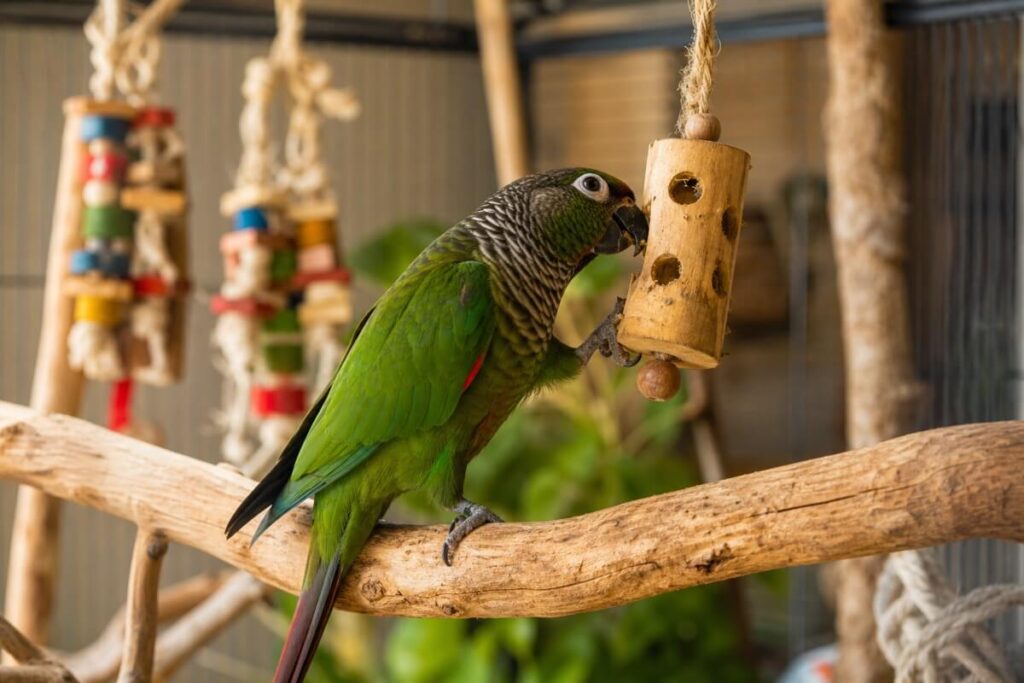
- Stuff pellets into foraging toys rather than serving them in a bowl
- Wrap food in paper or cardboard the bird has to tear open
- Hide portions in several locations around the cage
- Serve vegetables in large pieces that require work rather than pre-chopped
- Offer nuts in the shell to larger species
- Provide bird-safe branches — apple, willow, eucalyptus — for chewing
None of this changes the nutrition. It changes how long the food takes to get to, which for an intelligent animal is most of the point.
A Realistic Daily Routine
The exact schedule matters less than keeping it consistent, but a workable pattern looks like this:
Morning. Fresh chopped vegetables and the day’s measured pellets, served when the bird wakes and appetite is highest. Most parrots eat their largest meal within an hour of uncovering.
Midday. Leave pellets available. Remove any wet produce that has been sitting in warm conditions.
Afternoon. Training session with one or two nuts as reward.
Evening. Small fruit portion or a foraging toy loaded with pellets. Fresh water. Check what has actually been eaten.
Weekly. Weigh the bird and log it.
Annually. Full avian vet exam including bloodwork, regardless of how healthy the bird appears.
Frequently asked questions
Tap any question to open the answer.
What do parrots eat?
Pet parrots should eat roughly 60–75% formulated pellets, 20–30% fresh vegetables, and 5–10% fruit, with seeds and nuts reserved as training treats. Wild parrots eat seeds, fruit, nuts, flowers, and occasionally insects, but they burn 10 to 15 times more energy than a caged bird.
Can parrots eat only seeds?
No. All-seed diets cause vitamin A deficiency, fatty liver disease, and calcium deficiency. Seed mixtures are high in fat and low in the vitamins and minerals parrots require, and birds preferentially eat the fattiest seeds rather than balancing their own intake.
What fruits can parrots eat?
Papaya, mango, apple with the seeds removed, berries, melon, pomegranate, banana, and grapes are all safe in moderation. Fruit should stay at 5–10% of the diet because of its sugar content. Remove all stone fruit pits and apple seeds, which contain cyanogenic compounds.
What vegetables can parrots eat?
Kale, Swiss chard, collard greens, carrot, sweet potato, orange and red bell pepper, broccoli, squash, peas, and green beans. Dark leafy greens and orange vegetables are the most valuable because they supply the calcium and vitamin A precursors that seed diets lack.
What foods are toxic to parrots?
Avocado, chocolate, caffeine, alcohol, onion, garlic, xylitol, fruit pits, apple seeds, rhubarb, raw beans, and heavily salted or processed food. Avocado is the most dangerous — persin causes cardiac damage and death, and there is no safe amount.
Can parrots eat bananas?
Yes. Bananas are safe and most parrots enjoy them. They are high in sugar, so they belong in the 5–10% fruit allocation rather than as a daily staple.
What are the best pellets for parrots?
Harrison’s, Roudybush, TOP’s, and Zupreem Natural are commonly recommended by avian veterinarians. Choose a size appropriate to your species and avoid artificially colored or sweetened varieties. Your avian vet can advise based on your bird’s species and health history.
How often should I feed my parrot?
Serve measured pellets and fresh vegetables in the morning, leave pellets available through the day, and offer a smaller fresh portion in the evening. Measuring a daily volume rather than filling a large bowl prevents overfeeding and alerts you quickly if intake drops.
How do I switch my parrot from seeds to pellets?
Get a vet check first, buy a gram scale, and use either the meal-times method — pellets all day, seeds for two 30-minute windows — or gradual mixing starting at 10% pellets. Your bird should lose no more than 1–2% of body weight per week during conversion. Most birds take two to six weeks.
Can parrots eat cooked food?
Yes, if prepared without salt, oil, butter, or spices. Cooked brown rice, quinoa, lentils, chickpeas, and plain sweet potato are all useful. Serve fresh and remove leftovers within an hour.
The Part That Matters Most
If you take one thing from this page, take the ratio: mostly pellets, a substantial serving of vegetables, a little fruit, and nuts only as rewards.
The second is the scale. A gram scale costs less than a bag of pellets, and it will catch a problem weeks before your eyes do.
Diet is the single biggest lever you have over how long your bird lives, and how well. A parrot on a good diet with annual veterinary care can reach the upper end of its species lifespan. The same bird on seeds may not see half of it.
For veterinary-reviewed detail on nutritional disease in companion birds, the Merck Veterinary Manual’s section on nutritional diseases of pet birds is the most reliable free clinical reference available.
Wild Birds USA — care guides, supplies, and honest advice for parrot owners.
Follow us for funny talking clips, training videos, and the occasional parrot behaving badly: Facebook · Instagram · YouTube · TikTok · Pinterest · X / Twitter