

Quick Answer: Can Parrots Eat Almonds?
Yes — parrots can safely eat almonds. Raw, unsalted sweet almonds are one of the best nuts you can give your parrot. They are packed with Vitamin E, magnesium, calcium, and healthy fats. Just follow three simple rules: sweet almonds only, no salt, and offer them as a treat a few times a week — not every single day.
🦜 Short answer: Parrots can have 2 to 3 raw, unsalted sweet almonds — 3 to 4 times per week for large species — and they are completely safe when served plain with nothing added.
📋 Key Takeaways
- ✅ Sweet almonds, walnuts, cashews, pecans, pistachios, hazelnuts, and Brazil nuts are all safe for parrots in moderation
- ✅ Always serve nuts raw or dry-roasted — never salted, oiled, or flavored
- ❌ Bitter almonds are toxic (not sold in US stores, but important to know about)
- ❌ Peanuts carry a serious hidden mold risk — many bird vets recommend skipping them
- ❌ Macadamia nuts are never safe for parrots
- ❌ Salted, flavored, or chocolate-covered nuts are dangerous — no exceptions
- 📏 Nuts and other treats together should not go above 10 to 15% of your parrot’s daily food
The first time I watched my African Grey crack open a raw almond, I got it immediately. That powerful curved beak working through the shell — focused, deliberate, completely natural. It was exactly what parrots do in the wild. They hunt for their food. They work for it. And they absolutely know a good meal when they find one.
Nuts are genuinely good food for parrots. They provide real energy, healthy fats, and nutrients that most store-bought bird food runs low on. But not every nut is safe — and even the right ones cause trouble if you give too many, store them incorrectly, or buy the wrong type without realizing it.
Here is everything you need to know.
Are Almonds Good for Parrots?
Yes — almonds are one of the better treats you can offer. Every almond sold at an American grocery store is a “sweet almond,” which is the safe kind. There is a second type called a bitter almond, but it is not available in US stores. We will explain the difference in a moment, because it is worth knowing.
What Do Almonds Give Your Parrot?
One ounce of raw almonds — roughly a small handful — gives your parrot all of these:
| Nutrient | Amount | What It Does for Your Parrot |
|---|---|---|
| Vitamin E | 7.3 mg | Protects cells, keeps feathers healthy, boosts the immune system |
| Magnesium | 76 mg | Supports nerves, muscles, and hundreds of everyday body processes |
| Calcium | 75 mg | Builds strong bones and supports egg production in female birds |
| Protein | 6 g | Helps grow new feathers and repairs muscle and tissue |
| Healthy fats | 14 g | Good for the heart and helps the body absorb vitamins A, D, E, and K |
| Fiber | 3.5 g | Keeps digestion regular and prevents constipation |
| Phosphorus | 136 mg | Supports bone strength and gives the body energy |
The biggest win here is Vitamin E. Most seed-based diets are short on it — and when a parrot does not get enough Vitamin E, you see it clearly: dull feathers, getting sick often, and in serious cases, nerve problems. A few almonds per week can make a noticeable difference for birds eating mostly seeds.

What Are the Risks of Feeding Almonds to Parrots?
There are two real risks. Both are simple to avoid once you know about them.
Risk 1 — Too much fat. One ounce of almonds has 164 calories and 14 grams of fat. That might seem okay, but your parrot does not spend hours flying every day the way wild birds do. Fat builds up faster in a pet bird, and feeding too many almonds over time leads to weight gain, fatty liver disease, and a shorter life. This is why almonds stay in the treat category — they are not everyday food.
Risk 2 — Bitter almonds. This is the warning most parrot articles leave out. There are two kinds of almonds in the world: sweet and bitter. Bitter almonds carry a natural compound that turns into cyanide inside the body. Even a small amount can kill a bird. The good news: bitter almonds are not sold in US grocery stores by law — all American commercial almonds are sweet. But if you ever buy almonds from an international store, an unlabeled bulk bin, or overseas — check what type they are before giving any to your parrot.
🚨 Safety Rule: Buy your parrot’s almonds from a regular US grocery store or a well-known bird supply brand. Normal supermarket almonds are safe. When you are not sure, do not risk it.
How Many Almonds Can a Parrot Eat?
Bird vets recommend matching portion size to your parrot’s body size. Here is a simple guide:
| Species | Safe Amount | How Often |
|---|---|---|
| Hyacinth Macaw / Blue & Gold Macaw | 3–4 almonds | 3–4 times per week |
| African Grey Parrot | 2–3 almonds | 3–4 times per week |
| Cockatoo (Umbrella, Sulphur-Crested) | 2–3 almonds | 3 times per week |
| Amazon Parrot | 1–2 almonds | 2–3 times per week |
| Conure / Caique | 1 almond or half | 2–3 times per week |
| Cockatiel | Half an almond | 1–2 times per week |
| Budgerigar (Budgie) | A tiny piece | Once per week |
| Lovebird / Parrotlet | A small piece | Once per week |
Can Parrots Eat Walnuts?
Yes — and walnuts are actually the most special nut on this list. They are the only widely available nut that contains a good amount of omega-3 fatty acids — the healthy fats that protect the brain and heart. Every other common nut has mostly omega-6 fats. Both types are needed, but omega-3 is the one most pet parrots are not getting enough of.
Why Walnuts Are Especially Good for Your Parrot’s Brain
Omega-3 fats help keep brain cells healthy over time. This is most important for naturally intelligent species — African Greys, Amazon parrots, and Eclectus parrots. These birds have highly developed nervous systems, and what they eat directly affects how they think and behave. Adding a few walnuts to your parrot’s weekly routine can help with:
- Memory and learning — which makes training easier and more effective
- Feather quality — omega-3s help feathers grow in strong and shiny
- Heart health — walnuts lower bad cholesterol and improve circulation
- Less inflammation — inflammation in the body is quietly common in pet parrots eating poor diets
One ounce of walnuts gives 2.5 grams of omega-3 — more than six times the amount found in almonds. They also contain Vitamin E, B6, magnesium, and antioxidants that help fight cell damage.
English Walnuts or Black Walnuts — Which One Is Safe?
English walnuts — the regular type sold in every US grocery store — are mild, slightly sweet, and completely safe for parrots. These are the ones to buy.
Black walnuts are different. Their shells can hold mold and bitter plant compounds, and they are much harder — which is a real injury risk even for large parrots. If you want to use black walnuts, shell them yourself first and look at the inside carefully before serving.
Because walnuts have a little more fat than almonds — about 18 grams per ounce — be slightly more careful with portions. Two to four walnut halves, a few times a week, is more than enough for a large parrot.
What Other Nuts Can Parrots Eat?
Beyond almonds and walnuts, these nuts all make safe, healthy treats when served plain:
| Nut | Key Nutrients | Main Benefit | How to Serve |
|---|---|---|---|
| Cashews | Magnesium, iron, zinc | Bone strength and immune support | Raw, unsalted, shelled |
| Pecans | Vitamin E, healthy fats | Reduces inflammation, good for beak health | Raw, shelled, broken into pieces |
| Hazelnuts | Vitamin E, B vitamins | Protects cells and supports feather health | Raw, shelled |
| Pistachios | Protein, fiber, B6 | Helps digestion and brain function | Raw — must be completely unsalted |
| Brazil Nuts | Selenium, magnesium | Supports the immune system and thyroid | Maximum 1 small piece per week |
| Pine Nuts | Vitamin E, protein | Provides energy and protects cells | Raw, a small amount |
⚠️ Important Brazil Nut Warning: One Brazil nut has more selenium than a large parrot needs in an entire week. Too much selenium causes nerve damage. Keep it to one small piece, once a week, for large species only — and leave them out completely for small birds like budgies and cockatiels.
When learning what your parrot can and cannot eat, nuts are just one part of the picture. Read our guide on can parrots eat avocado — avocado is one of the most dangerous foods for parrots, and it sits in most American kitchens without owners knowing the risk.
Which Nuts Are Dangerous for Parrots?
Are Peanuts Safe for Parrots?
Peanuts need their own explanation because the danger is real and most people miss it completely.
Peanuts are not actually nuts — they grow underground like beans. Because of where they grow and how they are stored, their shells easily develop a harmful mold. This mold makes aflatoxins — toxic substances that damage the liver and raise cancer risk in birds. The worrying part is that you cannot see or smell aflatoxins. A peanut can look, smell, and taste perfectly normal and still be dangerous.
The safest choice: many bird vets recommend skipping peanuts altogether and using almonds or walnuts instead. If you do want to feed peanuts, buy only shelled, human-grade peanuts from a brand that tests specifically for aflatoxin. Never feed peanuts still in the shell — that is where most of the mold hides.
Are Macadamia Nuts Safe for Parrots?
No. Macadamia nuts are known to cause weakness, shaking, and nervous system damage in animals. Bird vets advise keeping macadamia completely away from parrots. There is no safe amount — just avoid them.
What About Salted, Flavored, or Chocolate-Covered Nuts?
Salt is genuinely harmful for parrots. Their kidneys are small and not designed to handle sodium the way human kidneys are. Even a light salt coating on a cashew puts extra strain on a bird’s kidneys. With repeated exposure over time, it causes permanent kidney damage.
Flavored nuts — garlic, chili, cinnamon, honey-roasted, barbecue — all contain seasonings that irritate or damage birds in different ways. Chocolate-covered nuts are doubly dangerous: chocolate contains a compound called theobromine that is directly toxic to parrots. To understand why chocolate is so serious for birds, read our article on can parrots eat chocolate.
One rule that covers everything: If the ingredient list on the package says anything other than just the nut, do not give it to your parrot.
How to Prepare Nuts for Your Parrot
Raw, Dry-Roasted, or Oil-Roasted — Which Is Safest?
Raw nuts are always the best option. Nothing has been added, and nothing has been damaged by heat. Before you buy, check the label — it should list exactly one ingredient: the nut itself.
Dry-roasted, unsalted nuts work fine as a second option when raw is not available. Just read the packaging carefully and make sure there is no oil, salt, or any flavoring listed anywhere.
Oil-roasted nuts should not be given to parrots. The added oils push the fat content even higher, and the high cooking temperature breaks down some nutrients while creating compounds that are not good for a bird’s stomach and digestive system.
Shell On or Shell Off?
It depends on the size of your bird:
- Macaws, Cockatoos, African Greys — These large parrots bite with enormous force. Almonds and walnuts in the shell are a fantastic challenge for them, and working through a shell also helps wear the beak down naturally.
- Amazon Parrots, Conures, Caiques — Results vary. Some manage an almond shell with no trouble; most struggle with harder walnut shells. Offer both and watch what your bird can handle.
- Cockatiels, Lovebirds, Parrotlets — Always remove shells before serving. Hard shell pieces can get stuck in the digestive tract (the part of the stomach that stores food before it is digested) or block the airway.
- Budgies — Break or crush any nut into very small pieces before giving it. A whole almond is a choking hazard for a bird this small.
The Storage Mistake That Harms Many Birds
Nuts go stale faster than most people realize — especially sitting in a warm kitchen. When the natural oils inside a nut go bad, they produce compounds that slowly damage your parrot’s cells. Keep all nuts in a sealed airtight container in the fridge or freezer. If a nut smells sour, bitter, or a bit off — or looks discolored at all — throw it out. Simple test: if you would not eat it yourself, do not give it to your bird.
Using Nuts for Play and Mental Stimulation
This is one of the best reasons to include nuts in your parrot’s routine.
Wild parrots spend most of their day searching for food. That is what their brains are built for. In a home setting, that drive does not go away — it just has nowhere to go. A bored parrot screams, pulls out its own feathers, and destroys whatever it can reach. Giving nuts in shells channels that energy somewhere positive.
Some easy ideas that actually work:
- Fold walnut halves inside a small paper cup and let your bird work it open
- Hide almonds inside foraging toys
- Thread unshelled nuts onto a rope perch
- Tuck nuts inside a ball of shredded paper inside a small cardboard box
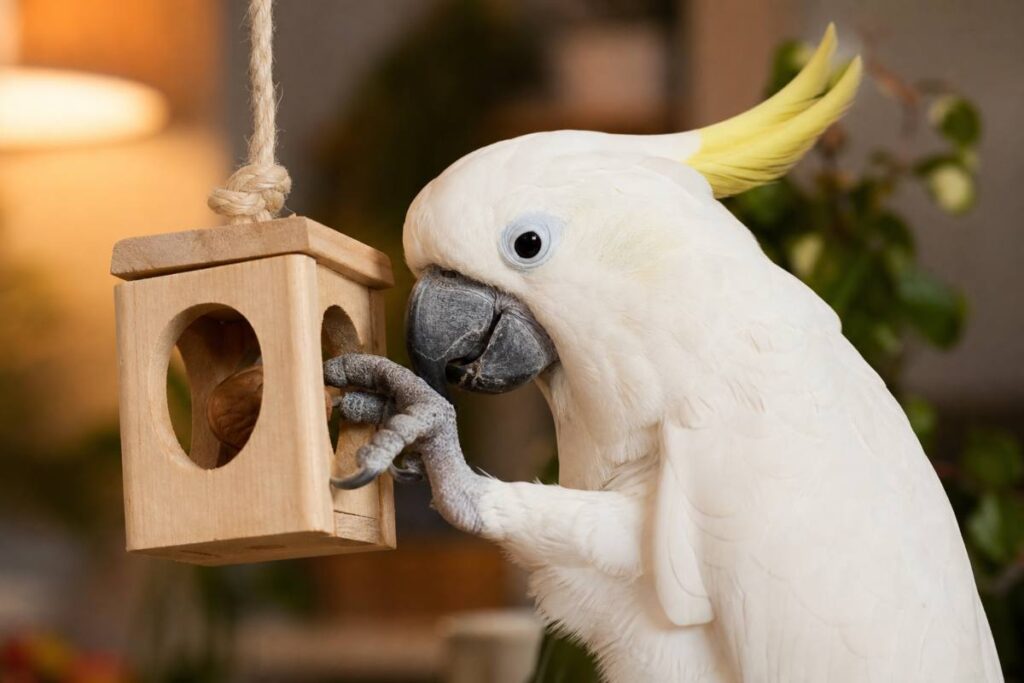
The food itself is almost beside the point. A macaw spending twenty minutes cracking a walnut is a happy, busy parrot — and a happy, busy parrot is not destroying your furniture.
For ideas on combining nuts with fresh fruits in a daily enrichment routine, check out our guide on can parrots eat apples.
For a full breakdown of how bird vets recommend structuring a complete parrot diet — including pellet amounts, fresh food percentages, and where treats fit in — the VCA Animal Hospitals African Grey feeding guide is one of the most trusted vet-written resources available online. The diet advice there applies to most large parrot species, not just African Greys.
Warning Signs: Did Your Parrot Eat Too Many Nuts?
Even safe and healthy foods cause problems when given in excess. Watch for these signs in the first few weeks after adding nuts to your parrot’s diet:
- Weight gain — Gently press along your bird’s chest with one finger. You should be able to feel the ridge of the breastbone clearly but it should not feel sharp. If you struggle to feel it under a thick layer, your parrot may be putting on weight.
- Soft or greasy droppings — A clear change in how the droppings look after you add high-fat treats is an early sign something is off.
- Less energy than usual — A slower, quieter bird after a diet change is worth keeping an eye on.
- Refusing normal meals — If your parrot waits for nuts and leaves its pellets and vegetables untouched, you are giving too many.
If you see any of these, cut back on nuts right away and return to a lighter, vegetable-heavy diet for a few days. If nothing improves, book an appointment with a bird vet.
Frequently Asked Questions
Can parrots eat almonds every day?
No. Feeding almonds daily leads to weight gain and liver disease over time because of the high fat content. Think of almonds as a training treat — something special, not routine. Two to four times per week, using the portion sizes in the species table above, is the right amount for most parrots.
Are roasted almonds safe for parrots?
Dry-roasted, unsalted almonds are fine to give. Oil-roasted almonds are not — the added oil increases fat and may include things that are not good for birds. Raw almonds are always the best pick. Before buying any roasted nuts, check the label. The only ingredient listed should be “almonds” — nothing else.
Can my parrot eat the almond shell?
Large parrots — macaws, cockatoos, African Greys — can crack sweet almond shells safely and many enjoy the challenge. The shell itself is not poisonous. For medium and small parrots, always remove the shell first. Shell pieces can get stuck in the digestive tract or block the airway in smaller birds.
Is there a type of almond that is dangerous for parrots?
Yes. Bitter almonds contain a natural compound that turns into cyanide inside the body — even a tiny amount can be fatal for a bird. These are not sold in US stores, so regular grocery store almonds are completely safe. Only double-check the type if you are buying from an international market or an unmarked bulk bin.
Can parrots eat walnut shells?
English walnut shells break into sharp pieces that can hurt the mouth or throat, even for large macaws. For most parrots, serving shelled walnut pieces is the safer and simpler choice. Never offer black walnut shells — they can harbor mold.
Can parrots eat peanut butter?
Plain, unsalted peanut butter with no artificial sweeteners is not immediately dangerous in very small amounts. However, it carries the same hidden mold risk as whole peanuts, and most store brands contain salt. Plain, unsalted almond butter is a much safer option if your parrot enjoys a spreadable treat.
How do I get my parrot to try almonds for the first time?
Offer a single half-almond directly from your hand. Hand-feeding builds a good feeling around new foods. If your bird ignores it, try cracking the shell a little so the natural scent comes through, or warm the almond for a few seconds to make it smell stronger. Some parrots take weeks to try anything new — that is completely normal. Keep offering it gently and without making a big deal of it.
How much of a parrot’s diet should nuts be?
Nuts and all treats combined should stay below 10 to 15 percent of your parrot’s daily food intake. A healthy parrot diet looks like this: 50 to 60 percent good quality pellets, 20 to 30 percent fresh vegetables and leafy greens, and 10 to 15 percent fruit, nuts, and occasional treats. Nuts add real nutrition — but they complete a good diet, not replace it.
Final Word
Almonds and walnuts are genuinely good for parrots — not just safe to eat, but actually useful nutritionally. Almonds fill real gaps in Vitamin E, calcium, and magnesium. Walnuts bring omega-3 fats that protect brain health and feather condition in ways no other common nut can.
The rules are the same for both, and they are easy to remember:
- Raw or dry-roasted only
- No salt — ever
- No flavoring of any kind
- The right amount for your bird’s size
- A treat a few times a week, not a daily meal
On the avoid list: skip peanuts unless the brand specifically tests for aflatoxin mold. Keep macadamia nuts out of your bird’s diet entirely. And the moment any salt, oil, honey, or seasoning is added to a nut — that nut is off limits for your parrot, no matter how small the amount.
Build your parrot’s diet on quality pellets as the base. Add plenty of fresh vegetables. Then layer in fruits and nuts as the treat and enrichment on top. Get that balance right, and your parrot’s feathers, energy level, and beak health will all reflect it.
About Wild Birds USA
Wild Birds USA is a parrot care and bird nutrition resource for American bird owners. Our guides are written from real hands-on experience with parrots and checked against current bird vet guidelines. This is the fourth article in our What Do Parrots Eat series — you can read the full series at wildbirdsusa.net.
Have a question about your parrot’s diet? Drop it in the comments below — we read and reply to every single one. 🦜