

Search this question and you get two answers. They flatly contradict each other.
Half the internet says avocado kills birds. The other half is a forum thread where somebody’s conure stole guacamole in 2014 and lived to tell the tale.
Both camps are telling the truth. That is exactly why the argument never ends.
The thing that settles it is rarely mentioned anywhere: there are documented doses. They explain why a nibble often does nothing, and why a real portion can stop a heart.
The short version: no, parrots cannot eat avocado safely. But the reason matters, because it tells you how worried to be if your bird already has.
Quick answer
No. Do not feed avocado to a parrot, in any form, including guacamole.
Avocado contains persin, a natural fungicide the tree produces to defend itself. In birds it damages heart muscle.
The Merck Veterinary Manual records two doses in budgerigars. One gram of avocado fruit caused agitation and feather pulling. 8.7 grams of mashed fruit caused death within 48 hours.
If your bird has already eaten some, call an avian vet now, even if the bird looks completely normal. In the documented cases, birds died 24 to 47 hours after eating. Looking fine on day one means nothing.
Key facts at a glance
- The toxin: persin, an oil-soluble fungicidal compound in the avocado plant
- What it damages in birds: heart muscle, causing myocardial necrosis. This is not a stomach upset
- Documented in: budgerigars, canaries, cockatiels, ostriches, chickens, turkeys
- Caged birds are more sensitive than chickens and turkeys
- Documented doses in budgerigars: 1 g caused agitation and feather pulling; 8.7 g of mashed fruit caused death within 48 hours
- Time to death in the documented cases: 24 to 47 hours after ingestion
- Most toxic part: the leaves, then bark, skin, pit, unripe flesh, ripe flesh
- Riskiest variety: Guatemalan types. Hass, the standard US supermarket avocado, is a Mexican-Guatemalan hybrid
- Diagnostic test available: none
- Antidote available: none. Treatment is supportive only
My parrot just ate avocado. What do I do?
If this is why you are here, start with this section.
1. Take the avocado away. Everything, including anything on a plate nearby.
2. Call an avian vet immediately. Do not wait for symptoms. Tell them what part was eaten, roughly how much, and when. If your regular vet does not see birds, call the nearest emergency clinic and ask for the closest avian practitioner.
3. Do not try to make your bird vomit. Do not give home remedies, oils, milk, or charcoal. Birds have a crop and a very different airway from a mammal’s, and forcing anything can kill a bird faster than the toxin will.
4. Keep the bird warm, quiet, and unstressed. A warm room, dim light, no handling, no other pets. A poisoned bird burning energy on stress does worse.
5. Watch for 48 hours, not two. This is the part people get wrong. In the documented cases, deaths happened between 24 and 47 hours after eating. Your bird can look completely fine all of day one.
6. Do not panic over a nibble. A tiny fleck of ripe flesh eaten by a large parrot is very different from a budgie eating a spoonful. Call the vet either way, but the amount genuinely matters.
Why can’t parrots eat avocado?
Persin is a natural fungicide. The avocado tree makes it to protect its fruit and leaves from fungus. It is oil-soluble and structurally close to a fatty acid.
In humans it does essentially nothing. That is why avocado is a health food for us and a hazard for a parrot.
In birds, it kills heart muscle cells.
That is the part most guides miss. Avocado poisoning in a bird is not a digestive problem. It is a cardiac one.
According to the Merck Veterinary Manual, avocado causes myocardial necrosis in birds. In plain English, patches of heart muscle die.
When vets examine birds that died this way, the damage is worst in the ventricle walls and the septum, the parts working hardest. The heart can show pale streaks where tissue has died. Fluid collects around the heart, in the chest, and under the skin.
Merck lists the signs in birds as lethargy, labored breathing, loss of appetite, and swelling under the skin of the neck and chest, followed by death.
That swelling is not an allergic reaction. It is fluid backing up because a damaged heart has stopped moving blood properly.
How much avocado is actually dangerous?
Here is the data that settles the argument, from the Merck Veterinary Manual’s toxicology section on avocado toxicosis in animals:
- 1 gram of avocado fruit fed to budgerigars caused agitation and feather pulling
- 8.7 grams of mashed avocado fruit caused death within 48 hours
Now put those numbers in context. A budgerigar weighs roughly 30 to 35 grams.
| Dose | As a share of a budgie’s body weight | Outcome |
|---|---|---|
| 1 g | about 3% | agitation, feather pulling |
| 8.7 g | roughly 25 to 30% | death within 48 hours |
A quarter of its own body weight in avocado. For a 150 pound adult, that would be roughly 40 pounds of it in one sitting.
That one comparison explains almost every argument you will find online.
Why does my bird eat avocado and seem fine?
The forum posts are not lying. A parrot that grabs a fleck of ripe flesh off a plate very often shows no signs at all. That is a tiny fraction of a dose shown to kill.
The toxic-food lists are not lying either. Avocado has killed birds, repeatedly, in controlled conditions.
Both are true because this is a dose problem, not an on-off switch.
The trouble is that you cannot control the dose at home. You don’t know how much persin is in the avocado on your counter. You don’t know how sensitive your bird is. And you can’t take a bite back once it is swallowed.
There is also a second study worth knowing about. In 1989, researchers gave mashed avocado of two varieties to eight budgerigars and eight canaries, with two budgerigars given water as controls. Six budgerigars and one canary died within 24 to 47 hours. Both varieties killed birds. Higher doses killed more of them. The two water controls were fine throughout.
That study is where much of the modern guidance comes from, and it is why avian veterinarians do not hedge on this.
Which part of the avocado is most dangerous?
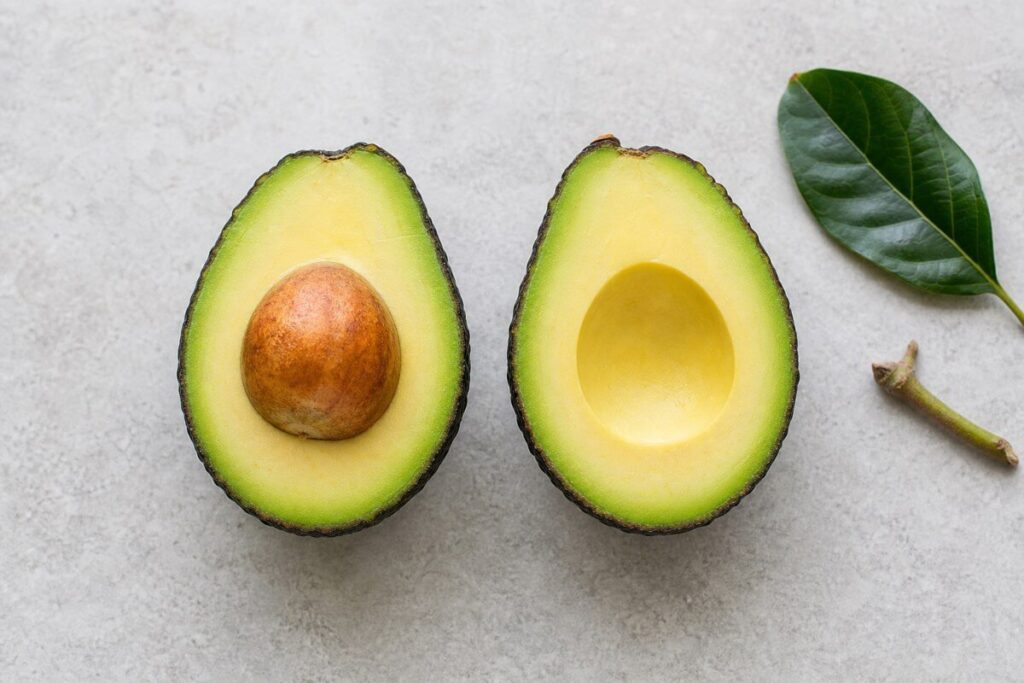
Persin is not spread evenly through the fruit. The concentration follows a gradient.
| Part | Relative risk |
|---|---|
| Leaves | Highest. Merck names leaves as the most toxic part |
| Bark and stems | Very high |
| Skin and peel | High |
| Pit or stone | High, and a choking or obstruction hazard as well |
| Unripe flesh | Moderate |
| Ripe flesh | Lowest, but not zero |
That gradient is where the forum claim comes from: the flesh is fine, only the skin and pit are dangerous. It is half right, and dangerously incomplete.
The flesh contains less persin than the skin or pit. Less is not none. And in the 1989 study, the birds were fed mashed fruit, not skin or leaves, and they died.
Are some avocado varieties safer than others?
Not all avocados carry the same risk. This is where it gets difficult.
Merck notes that the Guatemalan varieties have been most commonly associated with toxicosis. Colorado State University’s guide to poisonous plants describes the difference: Mexican types are smaller with thin skin, Guatemalan types are medium to large with rough, thick, woody skin.
Then comes the complication. Hass avocados, the standard supermarket variety across the US, Canada, and Australia, are Mexican-Guatemalan hybrids.
So the most common avocado in your kitchen carries Guatemalan genetics. Nobody prints the persin content on the sticker. Ripeness changes it. Growing conditions change it.
That is why avian vets give one answer instead of a portion size. There is no portion to give.
Which birds are actually at risk?
Merck lists the species documented as susceptible: budgerigars, canaries, cockatiels, ostriches, chickens, turkeys. It also notes that caged birds seem more susceptible, while chickens and turkeys seem more resistant.
Now notice what is missing from that list. There is no African Grey. No macaw. No cockatoo. No conure.
It would be a serious mistake to read that as safety.
Those species are absent because nobody has fed avocado to a controlled group of African Greys and recorded the results. You do not run that experiment on a bird that costs thousands of dollars and lives for fifty years. The absence of data is not evidence of safety.
What we do know is that the mechanism, myocardial necrosis from persin, is not budgie-specific. It has been documented across birds, horses, goats, sheep, cattle, rabbits, and mice. There is no biological reason a large parrot would be immune, and every reason to think a smaller bird simply reaches a dangerous dose faster.
What are the symptoms of avocado poisoning in birds?
Watch for these:
- Lethargy, sitting fluffed and still, reluctance to move
- Labored or open-mouthed breathing, tail bobbing with each breath
- Refusing food
- Swelling under the skin around the neck and chest
- Weakness or loss of balance
- Sudden death, sometimes with no warning signs at all
Now the part that matters most. Merck notes that myocardial insufficiency develops within 24 to 48 hours. In the 1989 study, the birds that died did so between 24 and 47 hours after eating.
So a bird can eat avocado at lunch and spend the rest of that day preening, eating, and playing exactly as normal. It can be in cardiac failure the following evening.
If your bird has eaten avocado and looks fine, that is not the all-clear. That is hour four of a forty-eight hour window.
Can parrots eat guacamole?
Nobody hands their parrot half an avocado. What happens is this. The bird is out on a shoulder, there is a bowl of guacamole on the coffee table, and it takes about two seconds.
Guacamole is worse than plain avocado for three reasons:
- It is mashed, the exact form used in the study that killed budgerigars, and mashed food goes down fast and in quantity
- It usually contains onion and garlic, both separately toxic to birds and both damaging to red blood cells
- It is salted, and birds tolerate very little sodium for their size
If you eat guacamole in a house with a parrot, the bird goes in its cage first. Not on the shoulder, not “just for a minute.”
The same applies to avocado toast, sushi with avocado, avocado smoothies, and salads with avocado in them.
How do you stop a parrot reaching food it shouldn’t?
Almost every food poisoning case in a pet bird comes down to one thing. The bird had access to a room where food was.
A parrot that free-ranges through the kitchen and the dining table will eventually reach something it should not. Avocado today, onion tomorrow, a chocolate wrapper the week after.
The fix is not vigilance. Vigilance fails. The fix is deciding in advance where the bird is allowed to be, bird-proofing that one space properly, and keeping the kitchen off the list entirely. Cooking fumes alone make the kitchen the worst room in the house for a bird, before food is even considered.
Working out how much freedom a large parrot needs, and how to set that space up safely? We cover out-of-cage time and room setup in the guide to macaw cage size and daily out-of-cage needs.
Can a vet treat avocado poisoning in a bird?
Merck is blunt on two points, and together they are why prevention is the whole strategy.
There is no diagnostic test. Diagnosis relies on you telling the vet what the bird ate. There is no blood test that confirms avocado toxicosis.
There is no antidote. Treatment is supportive: fluids, oxygen, warmth, heart medication if the vet judges it useful. Nobody can remove persin from the body or repair heart muscle that has already died.
So the vet is managing symptoms and hoping the damage is survivable. That is a much weaker position than most people assume when they say “I would just take him to the vet.”
What can parrots eat instead of avocado?

The good news is that parrots have an enormous list of safe fresh foods, and none of them require you to weigh a risk.
Safe fresh options that most parrots enjoy include apple without the seeds, banana, berries, mango, papaya, melon, carrot, sweet potato, leafy greens, peas, and bell pepper.
If you want the full picture on how fresh food should fit alongside pellets and seed, our guide to what parrots eat covers the whole diet. And for a fruit people ask about constantly, with the portion sizes that actually matter, see can parrots eat grapes.
The rule that keeps birds safe is simple. If you are not certain a food is safe, do not offer it. There is no fresh food a parrot needs so badly that it is worth a coin flip.
Frequently asked questions
Can parrots eat avocado at all, even a small amount?
No. There is no established safe amount for any parrot. Persin content varies by variety, ripeness, and growing conditions, and individual sensitivity varies between birds, so there is no portion anyone can call safe.
Is avocado flesh safe if you remove the skin and pit?
No. The flesh carries less persin than the skin, pit, or leaves. Less is not none. In the 1989 study on caged birds, the birds were fed mashed avocado fruit and six budgerigars and one canary still died.
How much avocado is toxic to a bird?
The Merck Veterinary Manual records that 1 gram of avocado fruit caused agitation and feather pulling in budgerigars, and 8.7 grams of mashed fruit caused death within 48 hours. A budgerigar weighs roughly 30 grams, so the lethal dose was around a quarter of its body weight.
How long does it take for avocado to affect a bird?
Myocardial damage develops within 24 to 48 hours. In the documented cases, birds died between 24 and 47 hours after eating. A bird that looks normal on the first day is not necessarily safe.
What are the symptoms of avocado poisoning in parrots?
Lethargy, labored breathing, refusing food, swelling under the skin of the neck and chest, weakness, and sudden death. Some birds die without showing warning signs.
Can my parrot eat guacamole?
No, and guacamole is worse than plain avocado. It is mashed, which makes it easy to swallow in quantity, and it usually contains onion, garlic, and salt, all of which are separately harmful to birds.
Are large parrots like African Greys and macaws safe from avocado?
There is no evidence they are. Large parrots are absent from the documented lists because those experiments were never run on them. Not because they were tested and found resistant. The toxic mechanism is not species-specific.
Is there an antidote for avocado poisoning in birds?
No. There is no antidote and no diagnostic test. Treatment is supportive care only, which is why prevention is the only reliable protection.
What should I do if my parrot ate avocado and seems fine?
Call an avian vet anyway. Deaths in the documented cases occurred 24 to 47 hours after ingestion, so appearing normal in the first few hours tells you very little.
If your bird has eaten avocado, call an avian vet now. Do not wait for symptoms and do not try to make the bird vomit. In the documented cases, deaths occurred 24 to 47 hours after eating, so a bird that looks completely normal today is not in the clear.
Bottom line
So, can parrots eat avocado? No. And not because somebody once heard it was bad. Avocado sits on the toxic list because birds were fed measured amounts under controlled conditions and died of heart muscle damage within two days.
The forum posts saying “my bird ate some and was fine” are accurate. They are also the reason people keep getting caught out. Small amounts frequently do nothing, and that is not the same as being safe.
There is no test to confirm it, no antidote to reverse it, and a window of up to two days in which a bird that looks perfectly healthy is not.
Keep it off the counter, keep the bird caged when guacamole is out, and feed one of the dozens of fresh foods that carry no risk at all.
Sources consulted
- Merck Veterinary Manual, Avocado (Persea spp) Toxicosis in Animals, Cristine Hayes DVM, ASPCA Animal Poison Control Center, peer reviewed by Ahna Brutlag DVM DABT DABVT, College of Veterinary Medicine, University of Minnesota. Full review September 2024
- Hargis AM et al, Avocado (Persea americana) intoxication in caged birds, Journal of the American Veterinary Medical Association, 1989
- Burrows GE, Tyrl RJ, Toxic Plants of North America, 2nd edition, Wiley-Blackwell, 2013
- Colorado State University College of Veterinary Medicine and Biomedical Sciences, Guide to Poisonous Plants, avocado entry
- International Veterinary Information Service, Persea americana: Avocado, guide to poisonous house and garden plants
Disclaimer: This guide is educational and does not replace veterinary advice. If your bird has eaten avocado, or shows lethargy, breathing difficulty, swelling, or any sudden change in behavior, contact a qualified avian veterinarian immediately.