

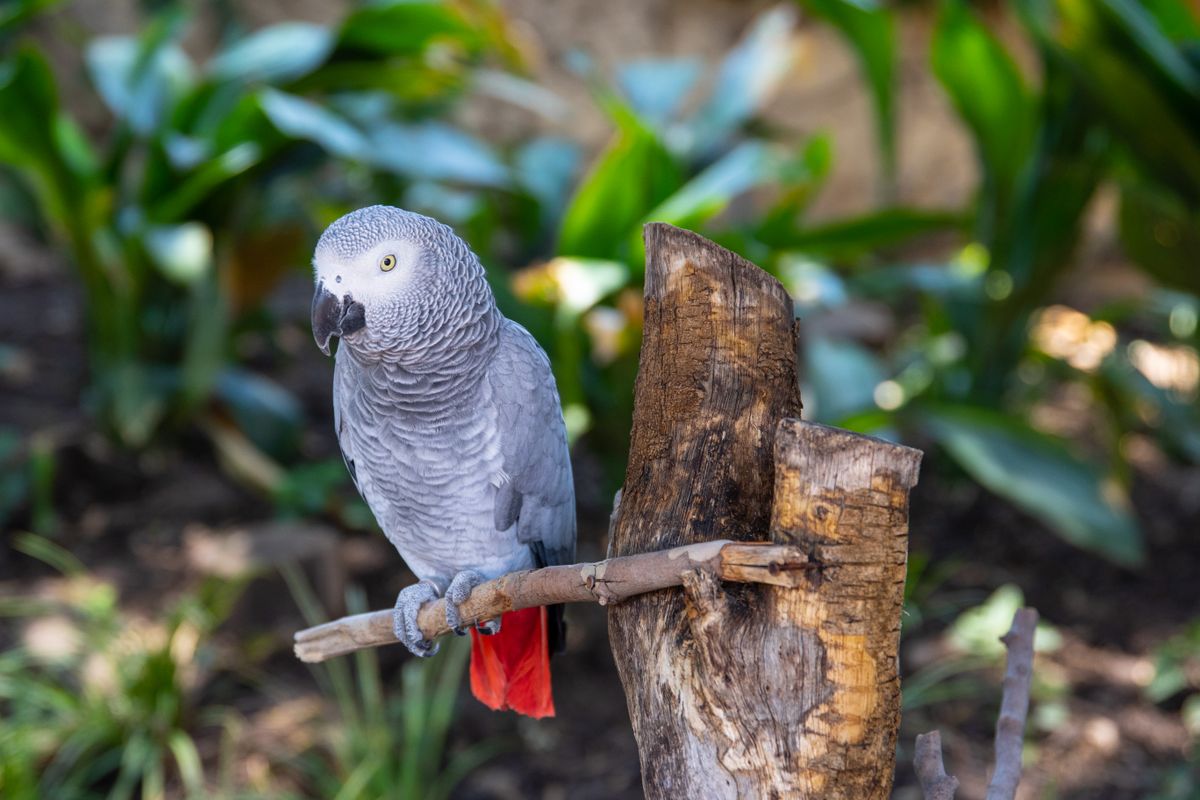
Species Overview: What Kind of Bird Are You Actually Getting?
The African Grey Parrot (Psittacus erithacus) originates from the equatorial rainforests of West and Central Africa — the Congo Basin, Ghana, Ivory Coast, Cameroon, and the surrounding region. They have lived alongside humans for thousands of years. Ancient Egyptian hieroglyphics depict them, Roman nobles kept them as status symbols, and Portuguese sailors introduced them to European royalty in the 1400s.
What makes the African Grey categorically different from every other parrot — and from most animals kept as pets — is not the talking. It is the thinking. Dr. Irene Pepperberg spent 30 years at Harvard University and Brandeis University working with an African Grey named Alex. The results of that research reshaped what the scientific world believed was possible in non-human cognition. Alex did not simply repeat sounds. He identified objects by color, shape, and material simultaneously. He understood the concept of zero — something most young children struggle with. When he made an error, he sometimes corrected himself before being told he was wrong. The conclusion of Dr. Pepperberg’s research was clear: African Greys process language at roughly the level of a 3–5-year-old human child.
🦜 Complete Quick Reference Table
| Scientific Name | Psittacus erithacus |
| Native Range | West & Central Africa — Congo Basin, Ghana, Cameroon, Ivory Coast |
| Adult Size | 12–14 inches (30–36 cm) |
| Wingspan | 18–24 inches (46–60 cm) |
| Weight | 400–490 grams |
| Lifespan in Captivity | 45–60 years; some individuals reach 70+ |
| Intelligence Level | Cognitive level of a 3–5-year-old child (Harvard-verified) |
| Vocabulary Potential | 200–1,000+ words with genuine context comprehension |
| CITES Status | Appendix I — wild-caught birds are illegal to import or sell |
| Subspecies | Congo African Grey (CAG) and Timneh African Grey (TAG) |
| Noise Level | Moderate — quieter than Cockatoos or Macaws |
| Suitable For | Experienced bird owners; requires significant daily commitment |
| USA Price 2026 | $1,500–$3,500 from a reputable breeder |
Congo vs. Timneh: Which Subspecies Is Right for Your Home?
Both subspecies are African Greys, and both are equally capable of forming deep bonds and developing impressive vocabularies. But they are not interchangeable — and choosing the wrong one for your household is a decision that affects both of you for decades. Here is what actually distinguishes them in daily life.
| Feature | Congo African Grey (CAG) | Timneh African Grey (TAG) |
|---|---|---|
| Size | Larger — 13–14 inches, 430–490g | Smaller — 9–11 inches, 275–375g |
| Feather Color | Light to medium grey, bright plumage | Darker grey — almost charcoal |
| Tail | Bright red — unmistakable | Maroon to dark red — less vivid |
| Upper Beak | Solid black | Light horn color |
| Full Maturity | Slow — 4 to 6 years | Faster — 2 to 3 years |
| First Words | Usually 18 months to 2 years | Often by 12 months; sometimes earlier |
| Personality | Intense; bonds deeply to one person | Adaptable; settles into family life more easily |
| Best Situation | Single person or dedicated primary caregiver | Families, multi-person households, first-time Grey owners |
| Lifespan | 50–60+ years | 40–50+ years |
Lifespan — Understanding a 60-Year Commitment
An African Grey Parrot will almost certainly outlive your dogs, your cats, and quite possibly your parents. The average lifespan in captivity with competent care is 45 to 60 years. Well-documented individuals have reached 70. This is not an exaggeration.
This matters because most people who surrender African Greys to rescue organizations — and rescues are full of them — did not fail through cruelty. They failed through a life that changed: divorce, job loss, a new baby, a move that did not allow pets. Before you commit to this bird, think carefully about who will care for it when you cannot. Many experienced Grey owners include explicit provisions in their wills. If you do not have a plan for your bird’s life after yours, you do not yet have a complete plan.
| Factor | Impact | What You Can Do |
|---|---|---|
| Diet Quality | 🔴 Major — the #1 preventable killer | 60–70% quality pellets, 20–25% fresh vegetables, fruits as treats |
| Cage Size | 🔴 Major — chronic stress shortens lives | Absolute minimum 36″×36″×48″; bigger is always better |
| Avian Vet Care | 🔴 Major — birds hide illness until critical | Annual check-up + full bloodwork from a certified avian vet |
| Mental Stimulation | 🟡 Significant — boredom causes destruction | Daily training, foraging toys, puzzle feeders, rotating enrichment |
| Social Interaction | 🟡 Significant — Greys are deeply social | Minimum 2–3 hours direct daily engagement; more is better |
| Sleep Quality | 🟡 Significant — weakens immunity if disrupted | 10–12 hours of uninterrupted dark, quiet sleep nightly |
| Air Quality | 🟡 Significant — avian lungs are highly sensitive | No non-stick cookware, no aerosols, no candles, no cigarette smoke |
Cage Size & Setup — Getting the Environment Right
African Greys spend a meaningful portion of every day in their cage — even with generous out-of-cage time, that enclosure is their home base, safe space, and sleeping quarters. A cage that is too small causes chronic psychological stress that manifests as feather plucking, aggression, and repetitive behaviors. Once these patterns are established, they are extremely difficult to reverse. Getting the cage right from the start is far easier than fixing the consequences of getting it wrong.
Minimum & Recommended Cage Dimensions
| Measurement | Minimum Acceptable | Recommended |
|---|---|---|
| Width | 36 inches (90 cm) | 48 inches (120 cm) or larger |
| Depth | 24 inches (60 cm) | 36 inches (90 cm) or larger |
| Height | 48 inches (120 cm) | 60–72 inches (150–180 cm) |
| Bar Spacing | ¾ inch (19 mm) — non-negotiable | Same — this is a hard safety limit |
| Bar Material | Powder-coated steel | Stainless steel — easier to clean, no coating to chip |
| Bar Orientation | Mixed horizontal and vertical | Predominantly horizontal — Greys climb with beaks and feet |
Where never to place it: The kitchen is the most dangerous room in your home for any bird. Non-stick (PTFE/Teflon) cookware releases fumes at high heat that are acutely lethal to birds — often within minutes of exposure. A Grey in an adjacent room is not safe if fumes can travel. Also avoid: air conditioning vents (drafts cause respiratory illness), direct sunlight without shade, and any isolated room away from family activity.
▶️ Watch: The Complete African Grey Parrot Care Guide — Wild Birds USA
Diet — The Most Common Mistake and How to Avoid It
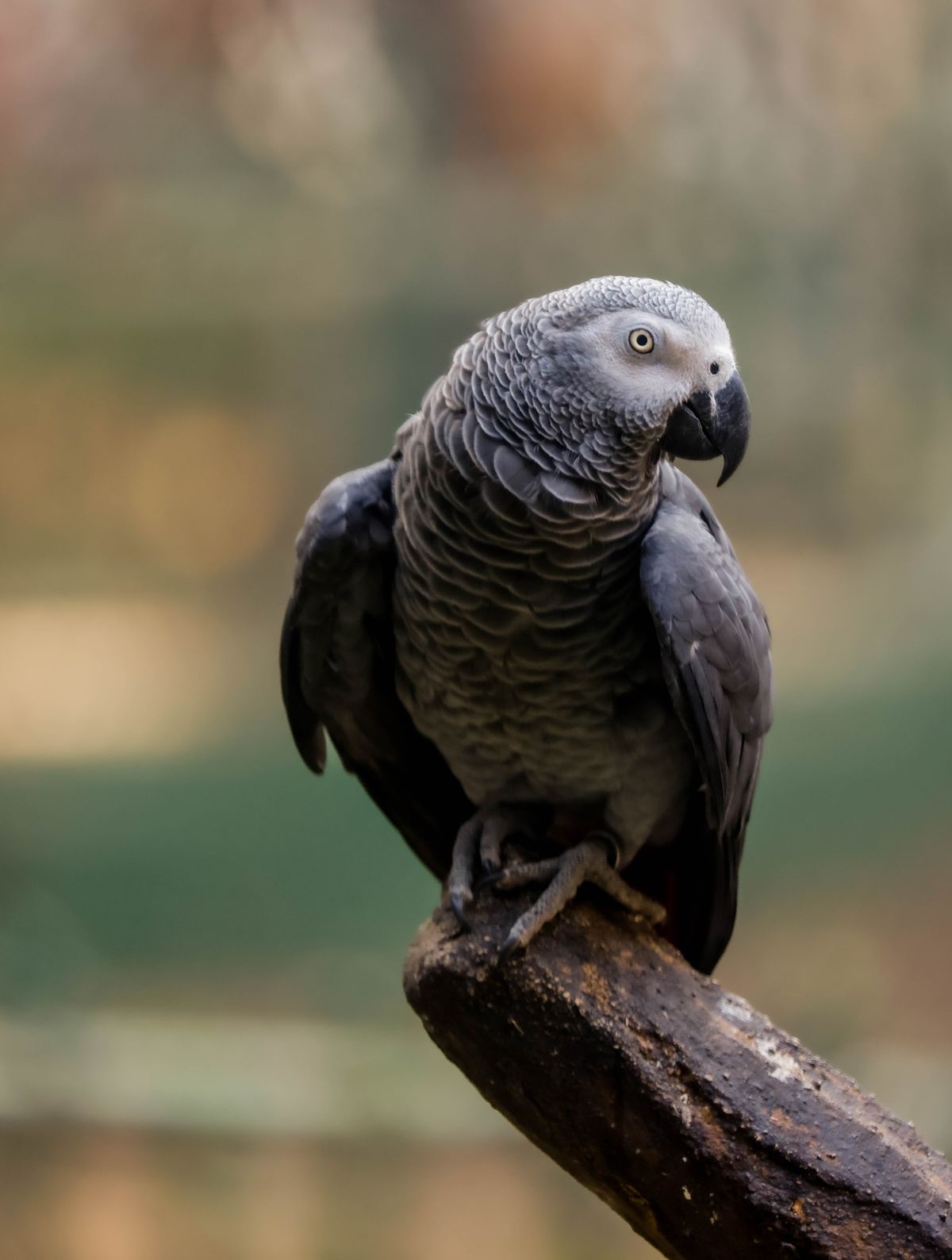
More African Greys die prematurely from poor diet than from any other cause. The culprit in most cases is a seed-heavy diet — either recommended by an under-informed seller or adopted because the bird seemed to enjoy seeds. Seeds are high in fat and low in the vitamins and minerals African Greys specifically require. A bird living on seeds is slowly developing fatty liver disease, vitamin A deficiency, and calcium deficiency — conditions that do not become visible until they are already advanced.
| Food Type | Daily Proportion | Best Choices |
|---|---|---|
| Quality Pellets | 60–70% | Harrison’s Bird Foods, Roudybush, Zupreem Natural — avoid colored or sweetened varieties |
| Fresh Vegetables | 20–25% | Kale, spinach, Swiss chard, carrots, bell peppers, broccoli, sweet potato, cooked squash |
| Fresh Fruit | 5–10% | Papaya, mango, apple (core and seeds removed), berries, pomegranate |
| Grains & Legumes | 5% | Cooked brown rice, quinoa, lentils, chickpeas — always cooked, never raw |
| Seeds & Nuts | Treats only | 1–2 walnuts or almonds per day, used as training rewards — not a food group |
The Two Deficiencies Every African Grey Owner Must Prevent
Hypocalcemia (calcium deficiency): African Greys are more prone to dangerously low blood calcium than any other parrot species. Clinical consequences are severe — muscle tremors, seizures, inability to coordinate movement, and in acute cases, death. Prevention is straightforward: dark leafy greens every day, a cuttlebone always available in the cage, and annual blood calcium testing by your avian vet. Do not wait for symptoms. By the time a bird shows visible signs of hypocalcemia, the deficiency is already critical.
Vitamin A deficiency: A seed diet provides almost no usable vitamin A. Over time this weakens the immune system, damages the respiratory lining, and leads to kidney problems. The fix is simple and entirely food-based: orange and yellow vegetables — sweet potato, carrots, bell peppers — and dark leafy greens at every meal.
Training — Building a Relationship, Not Just Teaching Tricks
African Greys learn faster than almost any other pet animal. That is an asset when training goes well — and a liability when it does not, because they learn bad habits just as quickly as good ones. The foundation of everything with this species is trust. Trust is built slowly and lost instantly. There are no shortcuts.
Never use punishment — not a raised voice, not a cage shake, not forced handling. Punishment does not teach an African Grey what you want. It teaches the bird that you are a source of fear, and a fearful Grey is one that bites, screams, and plucks. Positive reinforcement is not just preferable with this species. It is the only approach that works long-term.
| Step | What You’re Building | How to Do It | Timeline |
|---|---|---|---|
| 1 | Trust | Sit near the cage daily without demands. Speak quietly. Offer treats through bars. Move slowly. Let the bird make the first move — every time. | 2–6 weeks |
| 2 | Step-Up | Present a finger at chest height, say “step up” once, calmly and clearly. Reward the moment the bird steps up — not after, not eventually. Immediately. | 1–4 weeks |
| 3 | Target Training | Use a thin stick or chopstick. Mark the instant the beak touches the tip — say “good” or use a clicker — and reward. This becomes your tool for all future behaviors. | 1–2 weeks |
| 4 | Vocabulary in Context | Use consistent words in consistent situations. “Water” always when presenting water. African Greys learn meaning through repetition in context — not through drills. | Ongoing; grows over years |
| 5 | Complex Skills | Wave, retrieve objects, identify colors, spin. Break every new behavior into the smallest possible steps. Reward partial success. A Grey that trusts you will astound you. | 4–16 weeks per skill |
Health — What to Watch For and Why Annual Vet Visits Are Essential
Birds evolved as prey animals, and that evolution left them with one significant liability as pets: they hide illness. A sick bird in the wild is a bird that gets eaten, so natural selection heavily favored birds that continued to look and behave normally even when something was seriously wrong. By the time an African Grey shows obvious signs of illness — sitting on the cage floor, puffed up, eyes closing — the bird is often in critical condition that has been developing for weeks.
| Condition | Warning Signs | How to Prevent It |
|---|---|---|
| Hypocalcemia (Low Calcium) | Muscle tremors, seizures, weakness, uncoordinated movement | Dark leafy greens daily, cuttlebone in cage, annual blood calcium test |
| Psittacosis (Chlamydophila) | Nasal discharge, eye discharge, lethargy, fluffed feathers, green urates | Quarantine any new bird 30 days minimum; annual vet screening |
| Feather Destructive Behavior | Plucked or chewed feathers, bare patches, skin irritation | Adequate mental stimulation, consistent daily routine, sufficient social time; always rule out medical causes with a vet first |
| Aspergillosis (Fungal) | Labored breathing, tail bobbing, voice changes, weight loss | Clean cage daily, no damp or moldy bedding, good room ventilation |
| Vitamin A Deficiency | Chronic nasal discharge, respiratory infections, white patches in mouth | Orange and yellow vegetables plus dark leafy greens at every meal |
| Proventricular Dilatation (PDD) | Regurgitation, weight loss despite eating, undigested seeds in droppings | Annual vet checks; early detection significantly improves outcomes |
Where to Buy or Adopt — Why the Source Matters
Where you acquire your African Grey is one of the most consequential decisions in the entire process. A bird from a reputable, experienced breeder who handles chicks from an early age and sells only fully weaned birds starts life with advantages — in socialization, health, and trust of humans — that make every subsequent year of ownership easier. A bird from a dubious source may spend years recovering from early deprivation, or may carry health problems that were never disclosed.
On pricing: In 2026, a healthy, well-socialized African Grey from a reputable US breeder costs $1,500 to $3,500 depending on subspecies, age, and region. If you find one advertised for $600, ask yourself why it is that cheap. Wild-caught birds, sick birds, and birds from poor breeding situations are cheaper because the real costs appear later — in veterinary bills, in behavioral work, in heartbreak.
On adoption: Rescue organizations across the country house dozens of African Greys at any given time — most surrendered not through neglect but through life circumstances. An adult rescue Grey is not a lesser bird. Many are extraordinarily bonded and deeply rewarding companions. The adjustment period requires patience, but it is almost always worth it.
Daily exotic parrot videos, expert care guides, and the funniest bird moments on the internet — across every platform.
Frequently Asked Questions
How long do African Grey Parrots live in captivity?
In captivity with good care, 45 to 60 years is the realistic range. Some individuals have reached 70 and beyond with genuinely exceptional conditions throughout their life. In the wild, the average is closer to 22–25 years, largely due to predation and habitat pressure. The long lifespan in captivity is one of the most commonly underestimated facts about this species — and one of the most important to absorb before making any decision.
What is the minimum cage size for an African Grey?
The hard minimum is 36 inches wide × 24 inches deep × 48 inches tall. Below that, the bird does not have room to move, stretch its wings, or engage in normal behavior. But minimum should not be your target — it is the floor, not the goal. Buy the largest cage your space and budget allow. A bird spending 10–12 hours a day in an enclosure benefits enormously from extra space and variety.
Can I just feed seeds? My bird loves them.
Your bird loves seeds the same way a child loves candy — they are high in fat, palatable, and easy to eat. They are not nutritionally adequate as a primary diet. A seed-heavy diet in African Greys causes fatty liver disease, vitamin A deficiency, and calcium deficiency. These conditions develop silently over years and then present as emergencies. The transition to a pellet-based diet with fresh vegetables takes patience, but it is not optional if you want a healthy bird at age 30.
At what age will my Grey start talking?
Congo African Greys typically produce their first recognizable words between 12 and 18 months, though some do not start until age 2. Timnehs often begin earlier — sometimes as young as 6 to 9 months. Neither timeline is fixed. The quality and quantity of verbal interaction you provide matters far more than the bird’s subspecies. Talk to your bird about what you are doing. Use words with intention and consistency.
My Grey bit me and I don’t know why. What did I do wrong?
Probably nothing catastrophic — but something. African Greys do not bite randomly. Every bite communicates: “I am overwhelmed,” “I am tired,” “I did not want to be touched right now,” “that person moved too fast.” After a bite, review what happened in the 30 seconds before it. Over time you will recognize the early body language — feathers sleeked tight against the body, rapid pupil dilation and contraction, tail fanning, a specific posture — that precedes a bite. That recognition is the skill that prevents future ones.
How much time outside the cage does an African Grey need?
A minimum of two to three hours of supervised, interactive time outside the cage every day. Not two hours of sitting in the same room while you look at your phone — actual engagement, conversation, play, training. Ideally, three to four hours. African Greys kept in cages for the majority of every day without meaningful interaction develop feather destruction, chronic screaming, and stereotyped repetitive behaviors that are genuinely difficult to reverse.
What is the real difference between a Congo and a Timneh?
Beyond the physical — Congo is larger with lighter grey plumage and a bright red tail; Timneh is smaller with darker charcoal plumage and a muted maroon tail — the meaningful difference is temperament. Congos bond very deeply to a primary person but can struggle with change. Timnehs are more adaptable and distribute affection more broadly across a household. For families or more variable daily schedules, the Timneh is the more forgiving choice. For someone who can dedicate consistent time to one bird, the Congo’s depth of bond is remarkable.
Is an African Grey the Right Bird for You?
I am not going to tell you that everyone should have one — because that is not true. African Greys are extraordinary animals, and they deserve owners who go in with their eyes fully open.
These birds need daily mental stimulation, or they will create their own — usually by destroying things or screaming. On top of that, they require two to four hours of real interaction every single day. Because they live 45 to 60 years, they will remember everything that happened to them, good and bad. Remarkably, they even notice when the furniture moves. And when their people are gone, they grieve.
Over time, they also learn your name. In addition, they pick up the names of your family members. Eventually, they figure out which words get a reaction and use them deliberately. As a result, they will tell you when they want to be picked up, when they want to be left alone, and sometimes — if you have given them the vocabulary — exactly how they feel.
If you have the time, the stability, and the genuine commitment this bird requires — few decisions in a bird lover’s life will be more rewarding. If you are not certain, wait until you are.
For more bird care guides, species profiles, and exotic parrot content, visit wildbirdsusa.net 🦜
Follow Wild Birds USA